1
Jump to content
(Link opens in a new tab)
Jump to footer
(Link opens in a new tab)

Ready to go?

Since Europe is made up of many different countries rather than being one single country, regulations may vary when crossing borders. Please note that entry and exit requirements are not the same throughout Europe. We therefore recommend checking the website of the Federal Ministry for European and International Affairs before traveling to stay informed about the current regulations of each country, especially regarding:

  • Visa requirements
  • Entry and exit regulations
  • Import and export rules for cash and goods
  • Validity requirements for travel documents


Insurance

Please make sure your insurance policy covers medical treatment, hospital stays, and emergency transportation in Europe, just as it does in your home country. If you do not currently have valid travel or health insurance for Europe, we strongly recommend purchasing appropriate coverage for the duration of your tour. Please note that accidents during sports or outdoor activities in alpine areas may require mountain rescue or helicopter evacuation, which can be very expensive and may not be covered by standard insurance policies.

Medical Emergency

If something happens or you are involved in an accident, please remember the European emergency number: 112. This number works throughout Europe and will connect you to local emergency services. If you require personal or prescription medication, please make sure it is permitted when entering the country. We also recommend informing us about any necessary medications before your arrival or during the booking process.

In addition, we recommend checking current vaccination recommendations and travel health advisories for your destination before traveling. Information for each country can be found on the website of the Federal Ministry for European and International Affairs.

Cash

In most European cities and tourist areas, credit and debit cards are widely accepted. However, many of our tours also include rural areas outside major cities, where card payments may not always be available. We recommend carrying some cash for small purchases, restaurants, or unexpected situations. Please also keep in mind that not all European countries use the Euro. Countries such as Switzerland, the United Kingdom, and Norway have their own currencies, so you generally cannot assume that foreign currencies will be accepted in shops or restaurants.

Payment Systems

When exchanging money, use reputable exchange offices or ATMs. It’s also a good idea to check current exchange rates online in advance, for example through the German Central Bank or services like Wise. Be aware that many US credit cards charge foreign transaction fees. Check with your bank before traveling to avoid surprises. ATMs are often cheaper than exchanging money at airports. Again, your bank can tell you what fees apply before your trip.

Mobile coverage and internet access in Europe are generally very good. In cities and most tourist areas, you can usually expect reliable 4G or even 5G service, and Wi-Fi is widely available in hotels, cafés, and public spaces. If you are traveling from the US, providers such as Verizon, AT&T, and T-Mobile often offer international plans. However, these plans can be expensive, and data speeds may be slower due to roaming. A more affordable option is to use a local SIM card or an eSIM, which can be activated digitally without a physical card. They are usually easy to set up and significantly cheaper. Please note that SIM cards purchased in EU countries generally work throughout the EU without additional roaming charges, although compatibility may vary depending on your phone.

Remote Areas, Navigation & Charging

In more remote or mountainous areas—especially in regions like the Alps—mobile signal can be weak or unavailable at times. It’s a good idea to download maps and important information for offline use before heading into these areas. On your cycling or hiking tour, you can also use our practical Eurobike & Eurohike On Tour App to navigate easily via GPS and stay on track, even without constant internet access. European outlets are typically Type C or F, so you’ll likely need a plug adapter. US devices may also require a voltage converter depending on the appliance.

Wheather conditions

Weather in Europe can be quite unpredictable, especially because of climate change and the Alps. Southern regions are usually warmer in the summer, but can also get pretty windy in the spring and fall. In and around the Alps, conditions can change quickly from sunny to cold. Rain showers are common in spring and fall, and summer afternoons often bring sudden thunderstorms. To stay prepared, we recommend using our travel checklist so you’re ready for any weather.

Fire Safety Regulations

Be aware that open fires are strictly prohibited in many parts of Europe, especially near forests and protected natural areas during the summer months. Due to hot and dry conditions, there is a significantly increased risk of wildfires, which can spread quickly and cause serious damage. Always follow local signs and regulations, and only use designated barbecue or fire areas where permitted.

Drinking Water Quality

Tap water in Northern and Central Europe, especially in countries like Austria, Germany, and Switzerland, is generally of very high quality and safe to drink. It is strictly controlled and meets high safety standards. In most places, you can refill your water bottle directly from the tap without concern, which is also a convenient and sustainable option while traveling. However, it is always recommended to check the specific guidelines for your destination in advance, as standards and practices may vary from country to country.

Traffic & Road Behavior

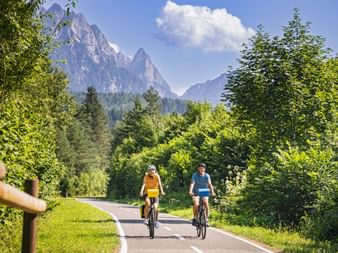
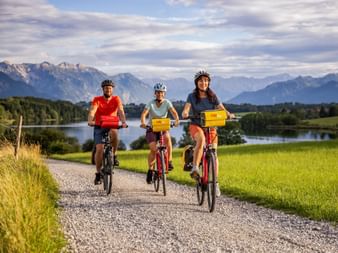
Most of our routes follow well-maintained bike paths. However, traffic can become heavier when entering or leaving larger cities. With the exception of the United Kingdom and Ireland, traffic in Europe drives on the right side of the road. In rural areas, roads may be narrower, more winding, or without clear lane markings. Right-of-way rules still apply, and hand signals are commonly used. If you are ever unsure, it is safest to get off your bike and let local traffic pass first. Helmet and lighting requirements vary by country. While helmets are not always legally required, we strongly recommend wearing one at all times. Bike lights are also strongly recommended, especially at night or in low visibility conditions. Our rental bikes are equipped accordingly. 

Helmet and lighting requirements vary from country to country. Helmets are not always required by law, but we strongly recommend wearing one at all times. The same applies to bike lights, which we also strongly recommend for safety, especially when riding at night or in low visibility conditions. Our rental bikes are equipped accordingly.

Behavior in Public Spaces

A calm and respectful attitude is appreciated throughout Europe, especially in public spaces and on public transportation, where loud conversations are less common. People generally wait in line and expect others to do the same. Cleanliness is also taken seriously in cities, parks, and natural areas. Respecting shared spaces helps keep the environment pleasant for everyone.

Safety in Europe

Europe is generally very safe for travelers. However, in larger cities, be aware of pickpockets, especially in busy tourist areas. Keep valuables out of sight and avoid leaving bags unattended. If you rented a bike from us, a lock is included, and e-bikes also have an additional rear wheel lock. Please use both whenever you leave your bike unattended, especially in train stations and crowded public areas.

Good Reasons to visit Europe

Europe is the only continent that brings together so many different cultures in such a small area while also having one of the oldest and most diverse histories in the world.

Unique diversity

Within hours, you can go from the Alps to Mediterranean beaches or from historic towns to modern cities, offering an unmatched level of geographic and cultural diversity.

Fascinating HIstory

From ancient civilizations and medieval castles to historic cities, Europe is home to some of the world’s oldest and most influential landmarks.

Vibrant Culture

Every country has its own traditions, language, architecture, music, and lifestyle, making each destination a unique cultural experience.

World-class Cuisine

Europe offers an incredible variety of traditional dishes, regional specialties, and world famous cuisine, all within short travel distances.

Safe Environment

Most European countries are safe, well organized, and offer reliable public transportation, making travel easy and comfortable.

Where to Fly in Europe?

With a Eurobike cycling tour, you’ll immerse yourself in some of the most beautiful corners of Europe, but first, you’ll need to get there. This often raises the question: Which city is best to fly into, and which connections make the most sense for reaching your destination comfortably? There’s no one size fits all answer, as the nearest airport isn’t always the most convenient or cost effective option.

That’s why we’re happy to support you with our expertise as you plan your journey. We’re happy to assist you personally in finding the best flight options and to recommend the most convenient gateways to help you reach your destination in Europe as comfortably as possible.

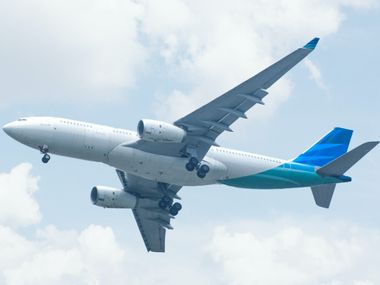
Plane

Transit by bus or train

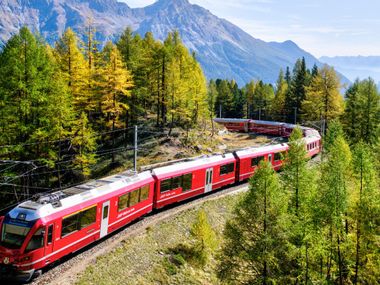
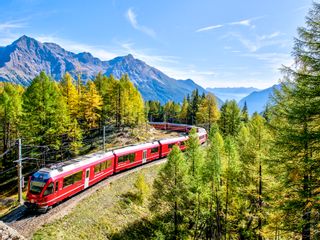
Traveling across Europe by train or public bus is not only one of the most sustainable ways to travel, but also surprisingly convenient thanks to the continent’s extensive transport network. Whether crossing alpine valleys, coastal regions, or vibrant cities, many destinations can easily be reached without a car.

When traveling with a bicycle, keep in mind that an additional bike ticket is often required on trains, and bike transport is not permitted on all buses. Tickets can usually be purchased online or at the station before departure, as onboard ticket sales are often unavailable. On regional buses, tickets are commonly bought directly from the driver at the front entrance. Delays, strikes, and timetable changes between summer and winter seasons can occur and vary from country to country, so a little flexibility always helps.

If you need assistance with bike or passenger transport before or after your tour, we recommend using the Rome2Rio or Trainline platform. It’s an easy way to find suitable travel connections for your journey. Of course, we are also always happy to help you plan the best possible connections and support you with your travel arrangements.
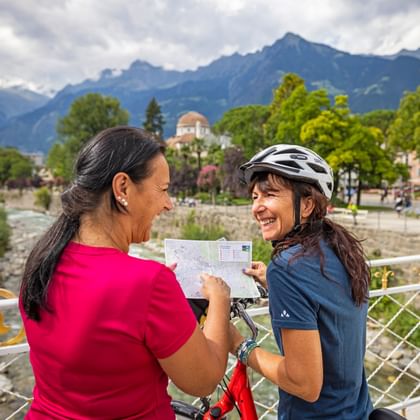
Train passes through a forest

FAQ & Travel Tips

Sorry! No FAQs were found. Please try again with a new search term.

When cycling in traffic, always follow local traffic rules and use the Eurobike & Eurohike On Tour app for navigation. Ride predictably, stay on the right side of the road, and signal your turns clearly with hand gestures. Be especially careful at intersections, when passing parked cars, and around traffic in general, as doors may open unexpectedly. Keep a safe distance from vehicles, pedestrians, and other cyclists. Stay alert at all times, avoid distractions like headphones, and make sure your bike is in good condition before each ride.

Helmet requirements differ across Europe, and in most countries there is no legal obligation for adults to wear one. However, we highly recommend wearing a helmet at all times for your own safety and the safety of those around you. Even where it is not required by law, it is considered best practice, especially when cycling in traffic or on longer rides.

If a thunderstorm or other unexpected weather event occurs, your safety should always come first. Find shelter as soon as possible, ideally indoors or in a safe building. Avoid open areas, forests, and exposed hills, and do not continue cycling during severe storms. If possible, wait until the weather improves before continuing your ride. Use the Eurobike & Eurohike On Tour app for updates and adjust your route if needed. Stay calm, follow local advice, and prioritize safety over schedule.
​​​​​​​In case of an emergency or if you are unsure how to continue your journey, you can also call our service hotline. A member of our team will assist you and provide guidance on your next steps and your further travel arrangements.
Tipping customs vary from country to country. In the United States, 15 to 20 percent is standard in restaurants with table service, as tipping is an important part of staff income. In Central Europe, tipping is more flexible and based on satisfaction. It is common to round up the bill or leave about 5 to 10 percent as a gesture of appreciation, but there are no strict rules.

In Southern Europe, practices can differ. In Italy, for example, a service charge or cover charge may already be included, and tipping is appreciated but not expected. Splitting the bill is common in most of Europe, especially in groups, but can vary depending on the situation.

You may have already noticed that the accommodations listed in your trip descriptions have different names. Here is an overview of the main types of lodging you may stay in, depending on your destination:

  • Hotels - standard accommodation, usually in towns and tourist areas
  • Pensions & guesthouses - smaller, family-run places, often with breakfast
  • Inns or gasthofs - accommodation with a restaurant, typically regional and traditional
  • Bed & breakfasts - private homes with rooms for guests
  • Hostels - budget-friendly, shared facilities, mostly in urban areas
  • Agriturismo - farm stays, especially in Italy, offering a rural experience
  • Fincas - traditional rural estates, mainly in Spain and the Balearic Islands

Traveling by bike is already one of the most environmentally friendly ways to explore Europe. By choosing a cycling tour, you are making a sustainable and low-impact travel choice that allows you to experience destinations in a more mindful and responsible way.

Sustainability at Eurobike plays an important role in how we design and operate our tours. Our Travelife certification for sustainable tourism confirms that we meet internationally recognized standards for environmental protection and sustainable operations in tourism. This means we actively work to reduce our environmental footprint and support local communities along our routes.

We also offer a Mindful Travel category, which highlights tours with a stronger focus on regional experiences, local culture, and sustainable travel choices. These tours are designed to give you a more authentic connection to the places you visit, while encouraging slower, more mindful travel that benefits both travelers and destinations.

How European are you?

As diverse as the landscapes of each country and region are, you will find just as much diversity in their cultures and ways of life. Knowing local customs can make a big difference when interacting with locals and helps create positive, genuine connections. A respectful approach will make your experience more enjoyable and communication much easier.

Austria - The heart of the Alps

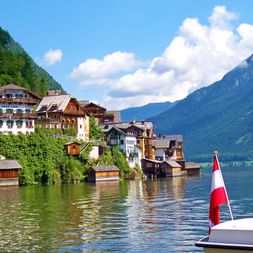
Located in the heart of Europe, Austria may be small, but it has strong character. Despite short distances, its regions vary greatly. What stays the same is the warm greeting, whether “Servus,” “Grüß Gott,” or “Hello.” Austrians take pride in their country and appreciate visitors who respect its culture and nature. Some interactions may feel direct or ironic at first, especially in Vienna, where the “Wiener Schmäh,” a mix of charm and humor, is part of daily life.

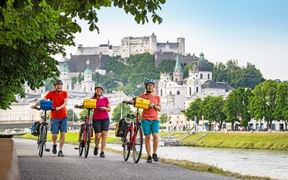
Cyclists next to the Salzach in Salzburg

Germany - Tradition Meets Modern Life

Germans, especially in central and northern regions, are known for their structure, precision, and clear communication. Closer to the mountains, the atmosphere becomes more relaxed and traditional. Bavarians take pride in their culture and hospitality and value visitors who appreciate nature. Across all regions, Germans are open-minded and enjoy connecting with people from around the world.

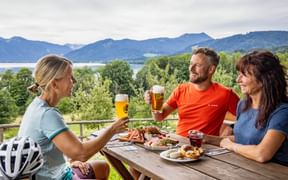
Three cyclists toasting with beer at a wooden table on a terrace. Lake Tegernsee and mountains visible in the background. Food platters on the table.

Italy - The land of "La dolce vita"

The further south you cycle, the more you notice a change in Italian culture and everyday life. Simple greetings like “Ciao,” “Buongiorno,” and “Grazie” go a long way, as people are generally more direct and less reserved.

Life is more relaxed, things often take longer, and long lunch breaks are common. Traffic can feel busy and a bit chaotic, with Italian drivers known for a spontaneous style. Because of this, defensive riding and staying alert are essential.

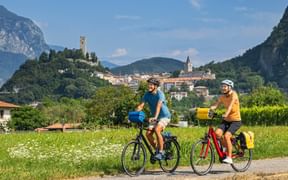
Two cyclists with panniers on a bike path near Gemona, Italy. Historic town with tower and church visible against mountain backdrop.

France - The Spirit of “Joie de Vivre”

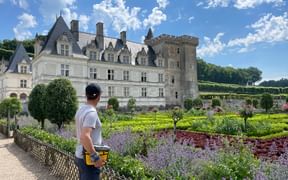
They’re often seen as a bit more serious, and always ’chic. There’s some truth to every cliché, but you really need to get to know the country and its people – and a cycling trip is a great way to do that. Politeness, a well-groomed appearance, and good manners are essential in France. If you get that right, you’ll discover the true heart of France. “Bonjour, ça va?” and a friendly, confident small talk are all you need to get started.

Cyclist with helmet viewing a French Renaissance castle along the Loire cycle route. Ornamental gardens with colorful flowers in foreground.

Spain - The rhythm of sun and soul

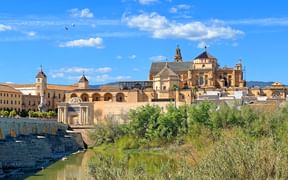
In Spain life tends to move a bit slower than in Central and Northern Europe and that is exactly part of its warm laid back charm. Spaniards are friendly outgoing and very easygoing. Even though regions in the south can feel a bit different people are generally warm and open everywhere.

Just remember “Hola ¿qué tal?” or “Buenos días ¿cómo estás?” and start a bit of small talk you will quickly see how easy and natural it is to connect with people.

View of Moorish fortress and green landscape

Slovenia - The green heart of Europe

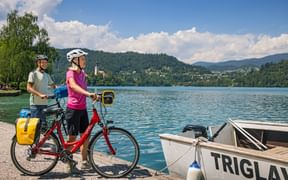
Slovenia, the small neighbor of Austria and Italy, is often overlooked—along with its culture and cuisine. People in Slovenia are friendly, calm, and rather reserved; a polite “Dober dan” is always appreciated. Courtesy, cleanliness, and respect are important values. Conversations are usually short and direct, as English is often not spoken in rural areas. While the country may feel quiet, its rich nature, traditions, and history are anything but.

Lake Bled Cyclist's break

Personal Insights & Facts

Find your perfect cycling holiday

Get in Touch

Julia Bann

We’re delighted to assist you with your journey to Europe.

Julia Bann
Team Lead Travel Specialists
One call to vacation bliss
Monday - Friday: 9.00 AM - 6.00 PM
Call now
(Link opens in a new tab)
One click to vacation bliss
 
I am looking forward to your message!
Contact form
Eurobike Newsletter
Sign up now and secure a bonus!
Sign up now
/en/travel-information/newsletter

We provide you with the latest information about our tours, our team and lots of travel inspiration. When you register, you will receive € 20,- credit towards your next cycle tour!

Secure a €20 bonus
Three cyclists in sportswear looking at a smartphone by a historic fountain in Hallein. Bicycle helmet and red bag visible in foreground.
You now receive special conditions when you book a trip.