
1
Jump to content
(Link opens in a new tab)
Jump to footer
(Link opens in a new tab)

Discover Bavaria’s World Heritage

Where UNESCO meets Cycling Bliss
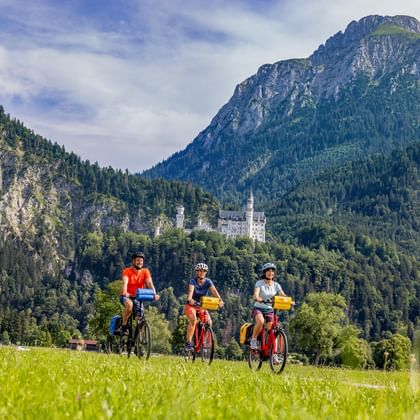
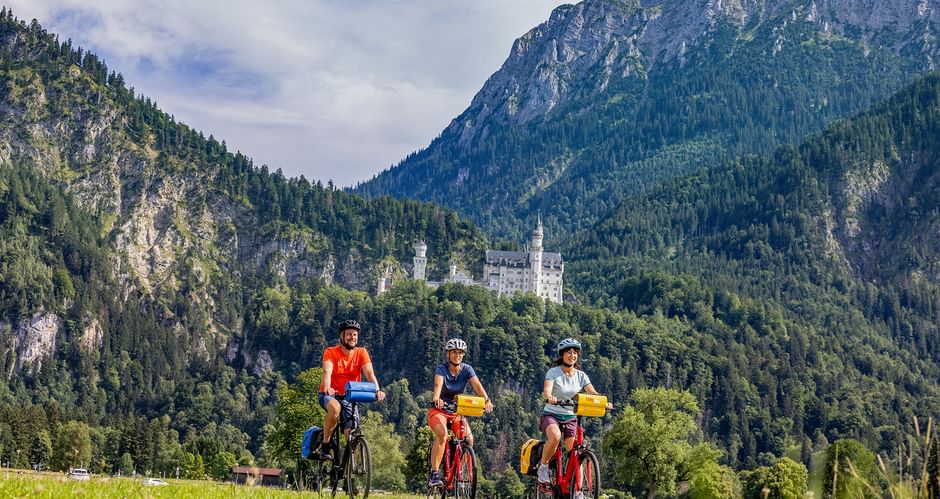
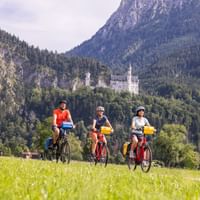
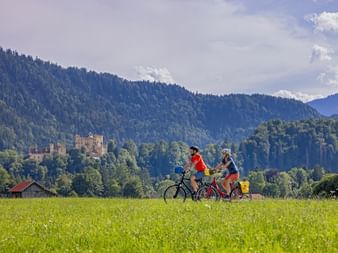
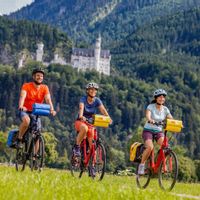
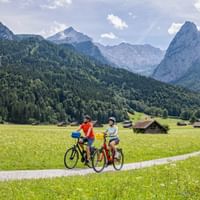
Three cyclists riding through a green meadow with Neuschwanstein Castle and forested mountains in the background under a blue sky.

Covering nearly 27,000 square miles, Bavaria is Germany’s largest state — and easily one of Europe’s most diverse cycling regions. Here, natural beauty and cultural treasures flourish side by side, with alpine peaks, tranquil lakes, and historic towns all within easy reach.

The UNESCO currently recognizes fourteen World Heritage sites across Bavaria. Among them are the Augsburg Water Management System, the old towns of Bamberg and Regensburg, and Herrenchiemsee Palace. As of July 2025, King Ludwig II’s royal castles will also join this illustrious list.

Many of these iconic sites are nestled right along our cycling holidays routes or are just a relaxed ride away, making it effortless to blend UNESCO wonders with unforgettable touring experiences.

Three cyclists riding through a green meadow with Neuschwanstein Castle and forested mountains in the background under a blue sky.

UNESCO World Heritage Sites...

...are special places, buildings, or landscapes of outstanding value — cultural or natural treasures of humanity under special protection.

They are often called stages of world history, which we can experience today and preserve for tomorrow.

Bamberg: City of seven hills

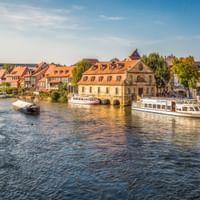
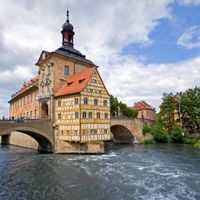
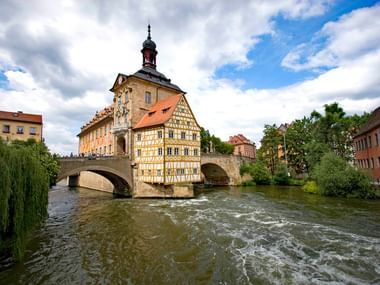
Bamberg’s old town has been a UNESCO World Heritage Site since 1993 and is considered a unique example of medieval urban development. Thousands of historic buildings dating from the 11th to 18th centuries shape its appearance. The city’s special atmosphere comes from its location on seven hills. The Romanesque Imperial Cathedral with four towers dominates the skyline, complemented by the baroque New Residence and the Old Court. Highlights include the iconic Old Town Hall on an island, the picturesque “Little Venice,” and historic craftsmen’s districts along the Regnitz River.

Historic half-timbered Old Town Hall of Bamberg built on a stone bridge over the river, with orange roof and tower under cloudy sky.

Extra-Tip

Even though it’s not a UNESCO treasure, Bamberg’s famous smoky beer belongs to the city just like the cathedral to the old town — a true classic for any cycling break.

Schloss Neuschwanstein

Built from 1869 by King Ludwig II as a private retreat, Schloss Neuschwanstein was inspired by the Wartburg in Thuringia and the operas of Richard Wagner. Despite its medieval appearance, it featured cutting-edge technology for its time, like hot air heating and electric call systems. Ludwig himself lived there for only a few months. Today, Neuschwanstein is one of Europe’s most visited attractions — and, as of 2025, also a UNESCO World Heritage Site.

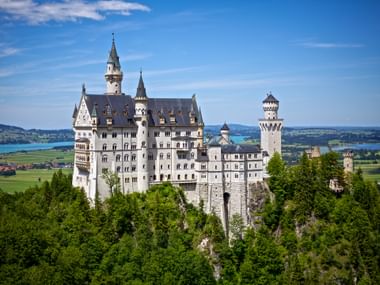
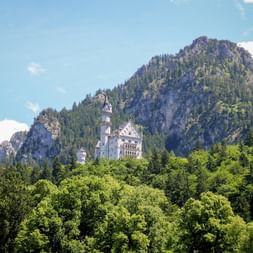
Neuschwanstein Castle perched on a forested hill with white towers and turrets. Blue lakes and green Bavarian landscape visible in background.

Extra-Tip

By bike, you can easily reach scenic viewpoints around the castle — like the Marienbrücke or the paths along the Alpsee — perfect for short photo stops away from the main crowds.

Augsburg: Water as World Heritage

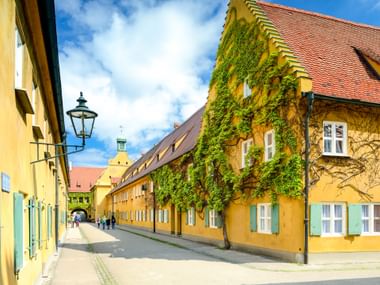
The Augsburg Water Management System is one of the world’s most important examples of historic water engineering. Over centuries, the “Fugger City” developed a unique network of canals, waterworks, and technical innovations — such as the early, strict separation of drinking and process water. Parts of the system are still in operation today.

Yellow buildings with ivy-covered walls and red-tiled roofs line the Herrengasse street in Augsburg's historic Fuggerei district.

Extra-Tip

Cycle through the Lech Quarter — quiet stretches along the canals are perfect for short stops, offering views of the water and historic buildings, away from the main routes.

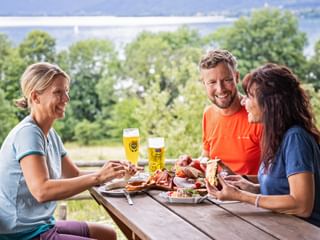
Traditional Bavarian meal with white sausages in ceramic bowl, pretzel with salt, mustard, and Kellerbier beer on wooden table near Kochelsee.

Food in Bavaria

Culinary Delights

Of course, cycling trips in Bavaria are directly connected with enjoying some local flavors. The menus of traditional Bavarian inns are full of “Schmankerl” — regional specialties you simply must try. Discover which dishes to sample here on our blog!

Prehistoric pile dwellings at Lake Starnberg

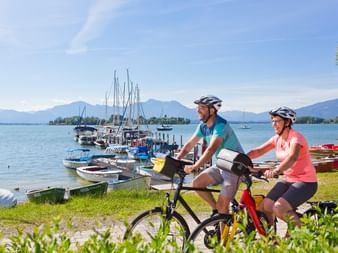
History comes alive around Lake Starnberg: On Roseninsel, you’ll find remains of pile dwellings dating back to around 500 BC. As part of the UNESCO site “Prehistoric Pile Dwellings around the Alps,” they offer insights into the region’s earliest settlements. People once lived close to the water for protection, easy access to fishing, and the fertile soils needed for farming.

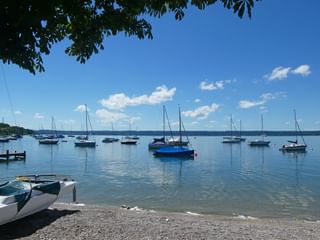
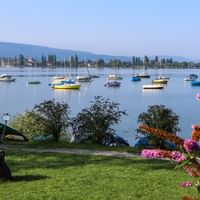
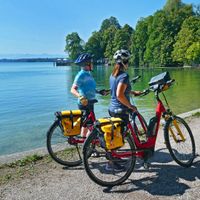
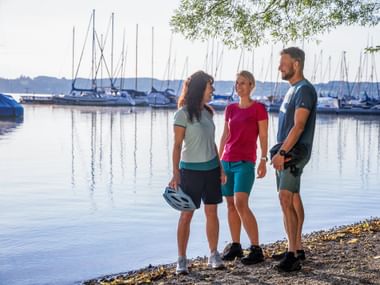
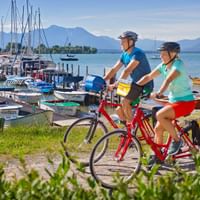
Three cyclists with helmets pause at Starnberger See harbor. Sailboats are moored in calm water, with distant hills visible under clear sky.

Extra-Tip

Lake Starnberg is perfect for a cycling circuit: From Feldafing or Possenhofen, head straight to the lakeshore, where you can easily reach Roseninsel by ferry — a relaxing mix of exercise, a quick boat ride, and a touch of culture.

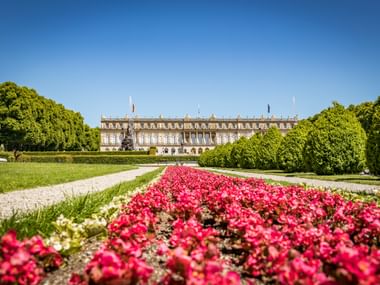
Schloss Herrenchiemsee

King Ludwig II had Schloss Herrenchiemsee built from 1878 on Herreninsel, inspired by Versailles and intended as a private retreat, only accessible by boat. Highlights include the Hall of Mirrors — actually larger than the one in Versailles — and the magnificent state rooms. The palace gardens are also modeled on French originals. Today, the south wing houses a museum.

Herrenchiemsee Palace in Bavaria with vibrant pink flower beds in the foreground, framed by manicured lawns and trees under a blue sky.

Extra-Tip

From the shores of Lake Chiemsee, a short ferry ride brings you to Herreninsel — a varied experience combining a scenic cruise, panoramic lake views, and a cultural highlight. If you stay overnight on the island, you'll enjoy a much quieter atmosphere in the evening after the day visitors have left.

All cycling tours in Bavaria

Warmth, comfort, and hospitality — that’s how you experience Bavaria by bike.

Questions and Answers about cycling in Bavaria

Sorry! No FAQs were found. Please try again with a new search term.

Each tour is assigned a certain level of difficulty: easymediumchallengingathletic. Since we offer numerous cycling tours in Bavaria, you can choose from the full range and select the route with the appropriate tour character. Easy and medium are particularly suitable for beginners, families and pleasure cyclists. Ambitious and sporty, on the other hand, are geared towards persevering and passionate leisure cyclists.

Bavaria is sometimes known for its hearty cuisine. Beer, pork knuckles, white sausages, Leberkäse, Obazada and much more. You can taste all of these, especially meat-heavy dishes, in the southern German region. And there are also plenty of delicious side dishes like coleslaw, potatoes, dumplings and sauces. Really delicious, but you'll have to turn a blind eye to the number of calories on holiday 😉

The ideal time to travel to Bavaria is from April to October. Not only the summer months of June, July and August are convincing, but also spring and autumn are particularly beautiful in Bavaria.

Travel Stories about cycling in Bavaria

Why wait? Your 2027 cycling holiday starts today!
Discover now & book
/en/cycling-holidays/2027
Top Tours 2027 bookable

Immerse yourself in the Italian dream of la dolce vita, or let yourself be drawn along the beautiful Blue Danube—your next dream cycling tour is waiting for you. Book our top tours for 2027 now!

Discover now & book
Cycling holidays 2027
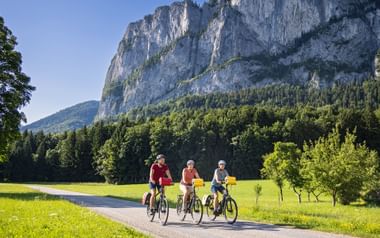
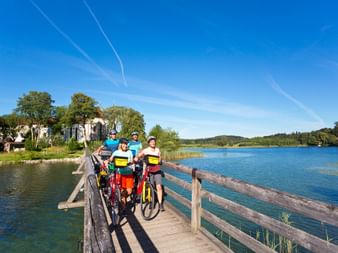
Three cyclists cycle past the Drachenwand rock formation on Lake Mondsee.
You now receive special conditions when you book a trip.